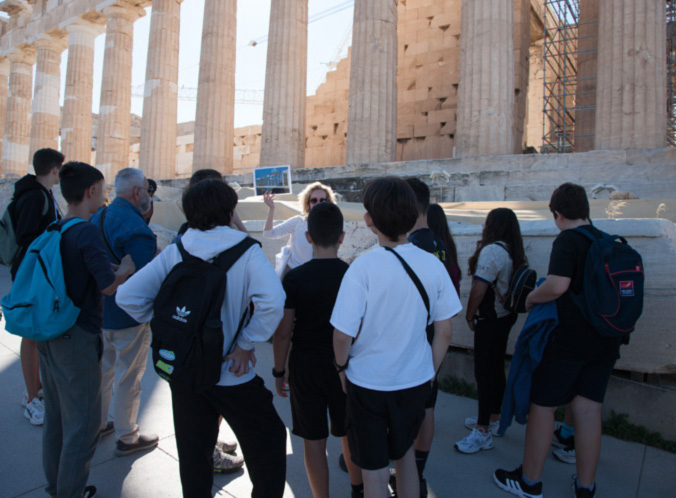

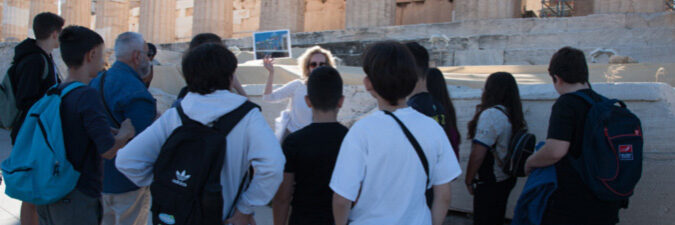
As part of the celebration of European Heritage Days 2026, with the theme: Heritage at Risk: Revive, Resist, Reimagine» the Acropolis Monuments Restoration Service (YSMA) implemented the educational programme titled: “Preserving the Acropolis Monuments as Bearers of Values and Memory in the World of Modern Challenges.” The educational program was designed by the Office of Information & Education and was carried out in collaboration with colleagues from the Technical office and worksite for the conservation and restoration of the Parthenon, as well as the Office and laboratory of surface conservation. The program took place on the Acropolis, on Friday, September 25, 2026, for a group of 27 secondary education students from the Onassis Public School – Kolonos Junior High School of the Municipality of Athens.
The aim of the educational program was to raise students’ awareness regarding natural and human-induced threats facing our cultural heritage—and specifically the Acropolis monuments—as well as to inform them about the protection and preservation of monuments as bearers of historical memory, cultural values, and collective identity.
The students were initially informed about the causes of monuments’ damage over time, and then about the principles and methods applied during the large-scale, modern restoration program implemented by YSMA. Afterwards, they toured the archaeological site and observed the restoration projects on each monument.
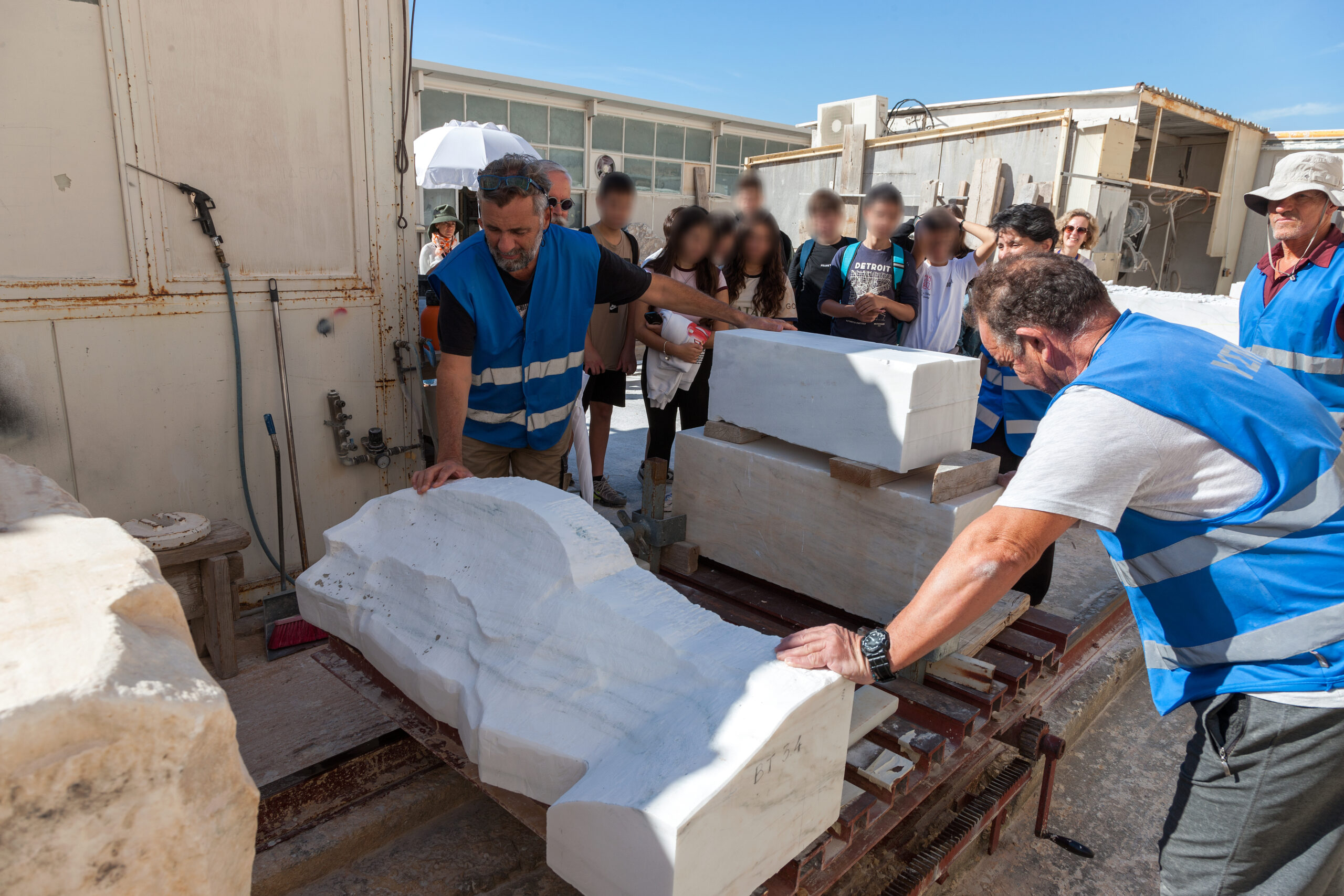
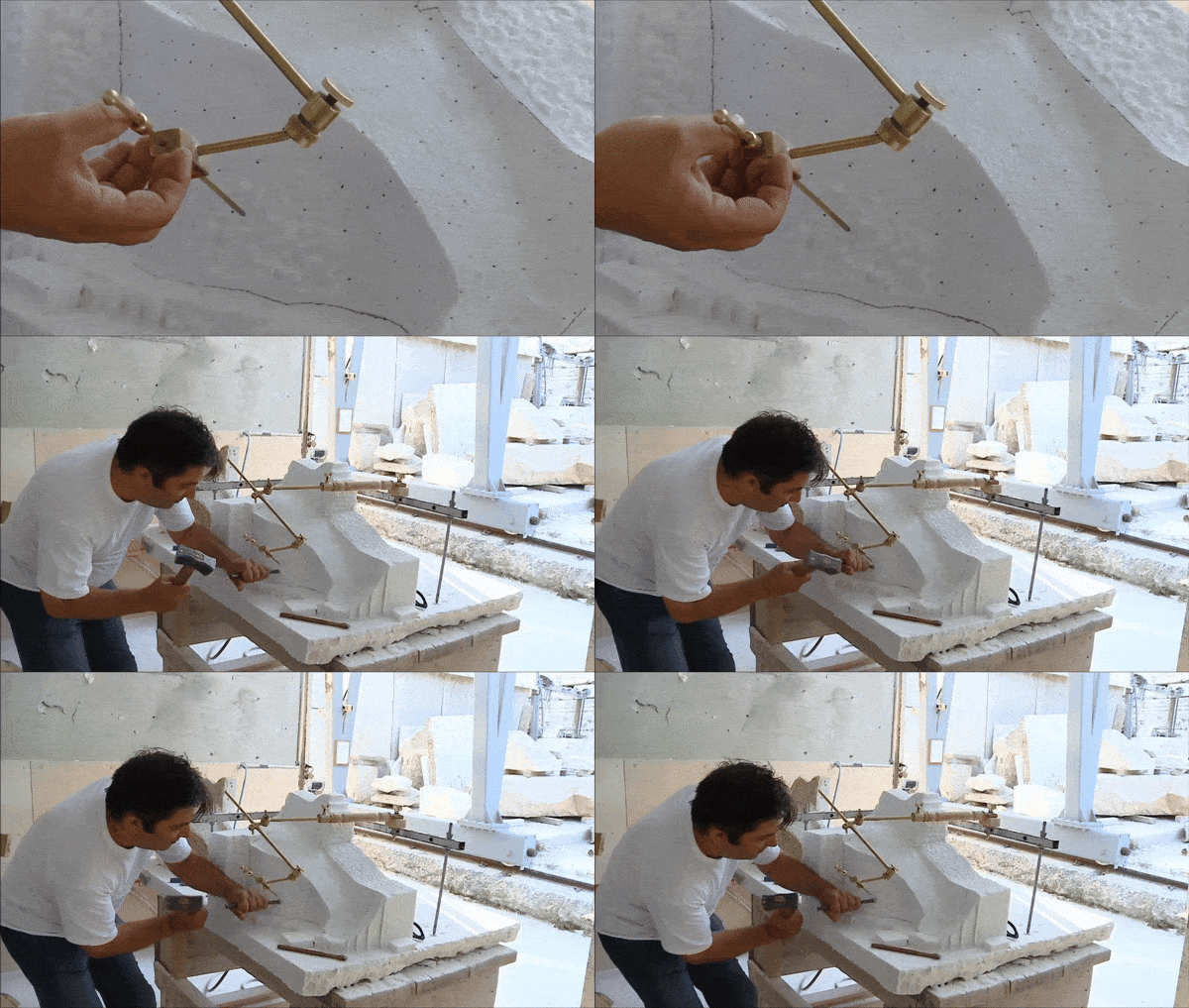
The students’ visit concluded with their participation in two workshops south of the Parthenon, designed by the specialized personnel of YSMA. In the first workshop, students had the opportunity to meet an archaeologist, an architect, and two stonemasons, who explained to them how they restore the architectural members to their original strength ensuring the stability of the monuments. At the same time, they presented the method of joining together an ancient member and a marble supplement and carried out an on-site joining. In the second workshop, students spoke with YSMA conservators. After an initial briefing on the methods used to conserve the surfaces of the monuments’ architectural members, they were shown the tools used, followed by specialized tasks such as cleaning small cracks and sealing them with mortar.
The direct communication between the students and the YSMA staff stimulated their interest in the necessity of protecting monuments, as well as in the professions involved in restoration and conservation works.